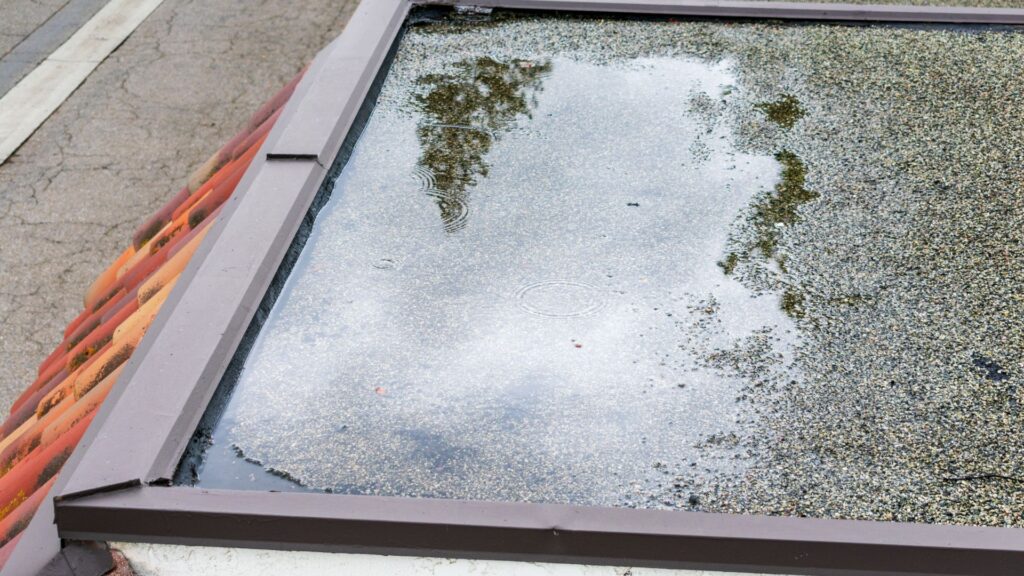
Flat roof ponding water may appear after a heavy storm. Water that remains or returns needs attention. Low-slope roofs still need clear drainage paths. Integrity Roofing, LLC serves homeowners who want to understand roof drainage and maintenance options in Arden.
A blocked drain, low area, damaged material, or poor drainage design can leave water on the roof. This guide explains common causes and safe steps for Arden homeowners, along with general information about available residential roofing services.
This article provides general roofing information. It does not diagnose any roof or promise a particular result.
How Integrity Roofing, LLC Can Assess Ponding Water
Contact Integrity Roofing, LLC when standing water remains or returns. The company’s website lists Arden among its service areas and advertises free inspections with same-week scheduling. Homeowners can review the company’s Arden service-area information before requesting an evaluation.
Ask Integrity Roofing, LLC whether it can evaluate the roof and drainage path involved. The official website confirms roof repair, replacement, storm-damage service, gutters, and repairs and maintenance involving leaks, flashing, vents, soffit, and fascia. It does not specifically confirm flat-roof ponding-water evaluations, drain maintenance, slope correction, or all repair methods discussed below. Learn more through the company’s about page and team page.
A roof assessment may review these areas:
- Roof drains, gutters, scuppers, downspouts, and leaders, where present.
- Low areas, sagging, and visible changes in the roof surface.
- Roofing materials, seams, flashing, and penetrations.
- Drains, crickets, saddles, curbs, and roof edges.
- Interior stains, damp materials, and other moisture signs.
The inspection may connect visible water with a possible cause. Depending on the findings and the company’s available services, work may include drain maintenance, a localized repair, slope correction, or broader roof work. Review the company’s Arden roof maintenance service for related service information.
Ask Integrity Roofing, LLC to explain the condition and available options. Review the proposed work before approving repairs. You can request a roof evaluation to discuss an evaluation in Arden.
What Is Ponding Water on a Flat Roof?
Ponding water remains on a flat or low-slope roof instead of draining or evaporating. Most roofs called “flat” have a slight slope. They also rely on drainage features. The National Roofing Contractors Association provides professional roofing information that can help homeowners understand roof-system terminology.
Those features may include roof drains, overflow drains, scuppers, gutters, downspouts, leaders, or other outlets. The roof’s design determines which features it needs. When gutters or downspouts form part of the drainage path, homeowners can review gutter services in Arden for related information.
Roofing guidance often uses about 48 hours as a reference point. This reference concerns water that remains after rain or snowmelt under drying conditions. NRCA materials and some manufacturers use this timeframe for drainage discussions. Some manufacturers also use it when defining ponding for specific membrane systems.
The 48-hour reference does not create a universal safety rule. Roof design, materials, weather, drainage, structure, and manufacturer instructions affect the evaluation. Applicable roof-assembly requirements may also depend on the International Code Council’s roof-assembly provisions and the code edition adopted for the project.
A small puddle that disappears soon after a storm may not signal major damage. However, temporary water can still reveal a drainage concern. A homeowner who notices recurring water can also review general roof inspection guidance before scheduling an assessment.
Water that persists, returns, expands, or accompanies a leak deserves prompt attention. Sagging or deep water also calls for a professional evaluation. Do not assume that the appearance of a puddle alone identifies its cause.
What Causes Water to Pool on a Flat Roof?
Several conditions can leave water on a flat or low-slope roof. An inspection can help identify the cause. The appropriate service may fall under roof repair in the residential roofing silo, depending on the roof’s condition and the company’s available services.
Blocked or Restricted Drainage
Leaves, pine needles, branches, and other debris can restrict drainage. Restrictions may affect roof drains, gutters, scuppers, downspouts, or connected leaders.
A backed-up downspout may affect the connected drainage path. However, each roof’s design determines how that restriction affects the roof surface. Do not climb onto a roof to clear a blockage when the surface is wet, damaged, or visibly unstable.
Low Areas and Sagging
Low spots can collect water after rain. Structural deflection, sagging, building movement, or damaged materials may create those areas.
Compressed insulation, deteriorated insulation, or damage beneath the membrane may also contribute. A visible dip does not prove structural damage.
A qualified professional should assess recurring ponding, visible sagging, or suspected damage below the roof membrane. If a condition suggests structural distress, a licensed design professional should evaluate the structure rather than relying only on a roofing observation.
Insufficient Slope or Drainage Design
A roof needs enough slope and suitable drainage for its design. The applicable code and manufacturer instructions should guide that evaluation.
Requirements can vary by roof system, project type, code edition, and construction stage. New construction and reroofing projects may involve different requirements. A roofing contractor should explain which project requirements apply rather than presenting one drainage approach as universal.
Do not assume that one drainage solution fits every roof. Ask the roofer to explain the proposed solution and its requirements. The company’s broader roofing service hub can help homeowners compare service categories without treating any one option as appropriate for every roof.
Damaged Roofing Materials
Open seams, worn membrane areas, failed flashing, and loose seals can allow water into a roof system. Damage near drains or scuppers can also affect drainage.
Crickets and saddles help direct water around some roof features. Damage in those areas may interfere with the intended water path.
Water from a wall, vent, equipment base, curb, skylight, chimney, or other feature may collect in one area. Poor slope or damaged details can worsen that concentration. A roofer should inspect the surrounding details before recommending a patch or broader work.
Why Can Ponding Water Damage a Roof?
Repeated or prolonged ponding can contribute to wear in some roof assemblies. The effect depends on the roof system, product instructions, exposure time, drainage, and existing condition. Homeowners can compare repair and replacement considerations through the company’s roof replacement information.
Some products tolerate longer water exposure than others. Ponding alone does not prove that damage occurred.
Retained water adds weight to the roof. The risk depends on water depth, water area, roof design, and the condition of the deck and framing.
Deep or widespread ponding creates more concern than a shallow, isolated puddle. Pronounced sagging may signal a serious structural issue. Keep people away from areas below a roof that may have structural damage.
Ponding can affect seams, penetrations, flashing, curbs, and roof edges. If the assembly develops a breach, moisture may reach the roof deck. Information about roof decking and tear-off conditions can provide general background, but it cannot determine the condition of a particular roof.
Moisture can cause interior stains or other water damage. Ceiling stains, damp drywall, peeling paint, and musty odors may indicate moisture intrusion. The U.S. Environmental Protection Agency’s mold and moisture guidance explains why moisture control matters indoors.
Plumbing leaks, HVAC condensate, humidity, and other sources can create similar signs. A professional should trace the source before blaming roof ponding.
When Should You Leave the Roof Area?
Stay off the roof when you see deep or widespread ponding. Also stay away when you see pronounced sagging, unusual movement, cracking, or active leakage.
Keep people away from areas below a roof that may have structural damage. Do not add weight to a roof with possible structural distress.
Seek prompt evaluation from a qualified roofing professional. Contact a licensed structural engineer or another qualified design professional when structural distress seems possible. For fall hazards involving ladders or roof access, consult the Occupational Safety and Health Administration’s ladder-safety standard.
Ponding does not automatically mean that the home needs a new roof. The roof’s age, materials, drainage, condition, and cause determine the available options.
What Should Arden Homeowners Do About Standing Water?
Start with safe observation. View the roof from the ground or another secure location.
Take photographs only when you can do so safely. Note when the rain ended and whether water remains afterward.
Also record whether water returns after later storms. During dry weather, you may document whether water remains after roughly 24 to 48 hours.
Use that timeframe for documentation only. Do not delay action when active leaks, sagging, electrical hazards, or other urgent conditions exist.
Check the home’s interior for these signs:
- Ceiling or wall stains.
- Damp drywall.
- Peeling paint.
- Musty odors.
- New or worsening water damage.
You can view an accessible gutter or downspout from a safe position. Do not climb onto a wet, damaged, or visibly sagging roof.
Do not use a ladder or approach a roof edge when doing so creates a fall risk. Avoid pressure-washing, puncturing, leveling, or patching the roof without professional guidance.
Do not attempt to remove ponding water yourself. Deep or widespread water may require qualified emergency mitigation.
For active leaks, protect belongings from a safe location. Follow emergency guidance without creating additional roof damage. If a storm caused the condition, homeowners can ask about the company’s storm-damage and insurance-claim services, subject to the facts of the loss and the terms of any policy.
Contact Integrity Roofing, LLC if the water continues, returns, or appears with interior damage. A professional may help identify the next practical step. Homeowners can also read the company’s customer reviews as part of their own contractor-selection process; reviews do not guarantee a particular outcome.
How Do Roofers Repair Flat Roof Ponding Water?
A roofer should inspect the roof before recommending work. The solution should address the cause, not only the visible puddle. The company’s Arden residential roofing page identifies the local service area, but homeowners should confirm whether a specific flat-roof evaluation or repair method is available.
Drainage Maintenance or Repair
Debris or a blockage may require drain, gutter, downspout, leader, or scupper work. The roofer should confirm the source before changing the drainage system.
Localized Roof Repair
A damaged seam, flashing area, penetration, or membrane section may need a compatible repair. The repair method should match the existing roof system.
Slope or Drainage Changes
A low area may need tapered insulation or another site-specific method. Wider drainage issues may require additional outlets or changes to the water path.
Building, plumbing, stormwater, permit, discharge, and manufacturer requirements may apply. The roofer should identify applicable requirements before work begins. In North Carolina, homeowners can review the North Carolina Licensing Board for General Contractors for general licensing information and confirm the requirements that apply to their project.
Roof Coatings
A coating may help some existing roof systems. However, a coating cannot correct every drainage, substrate, or structural condition.
Compatibility, adhesion, surface preparation, moisture, product instructions, and warranty terms all matter. A coating recommendation should not promise service life, watertightness, or warranty protection.
Roof Replacement
Replacement may make sense when a roof has widespread damage or advanced wear. It may also fit when concealed deterioration affects repair reliability.
Ponding alone does not prove that replacement makes sense. An inspection should support any replacement recommendation.
Ask for a clear explanation of the roof’s condition. Compare repair and replacement options before approving work.
FAQs About Flat Roof Ponding Water
Is ponding water normal on a flat roof?
Brief water after rain may occur before the drainage system clears the surface. Recurring or persistent ponding can point to a blocked drain, low area, damaged material, or poor drainage design.
A roofer can assess whether the water reflects temporary drainage or another concern. The roughly 48-hour reference does not create a universal safety rule.
Can I remove ponding water myself?
Avoid walking on a wet, damaged, or visibly sagging roof. Do not use a pressure washer, pump, tool, or unapproved product.
Observe the area from a safe location. Document the water and interior signs.
Arrange an evaluation if the problem continues. Deep or widespread water may require qualified emergency mitigation.
Does ponding water mean I need a new roof?
No. Some roofs need drain cleaning, localized repairs, flashing work, or correction of a low area.
Replacement depends on the roof’s age, materials, damage, drainage design, and overall condition. A professional inspection can help compare repair and replacement options.
Schedule a Flat Roof Inspection in Arden, NC
Recurring ponding, blocked drainage, low areas, and interior water signs deserve attention. Contact Integrity Roofing, LLC to discuss your roof concerns.
Call (828) 448-0855 to get started. The official site advertises free inspections for areas it serves, including Arden, though homeowners should confirm availability and the scope of a flat-roof evaluation directly with Integrity Roofing, LLC. You can contact the roofing company or confirm scheduling options before requesting service.
The inspection findings, roof condition, and applicable requirements will affect those options. Past results, if discussed, do not predict future results.