A pitched residential roof sheds water by design. A low-slope commercial roof does not have that luxury. Water lands on a nearly flat surface and has to be guided off, on purpose, through a system engineered for that job. If you manage a retail center, an apartment building, an office, or a hotel, understanding how that system works helps you spot trouble before it becomes a leak.
Why Low-Slope Roofs Need an Engineered Drainage Plan
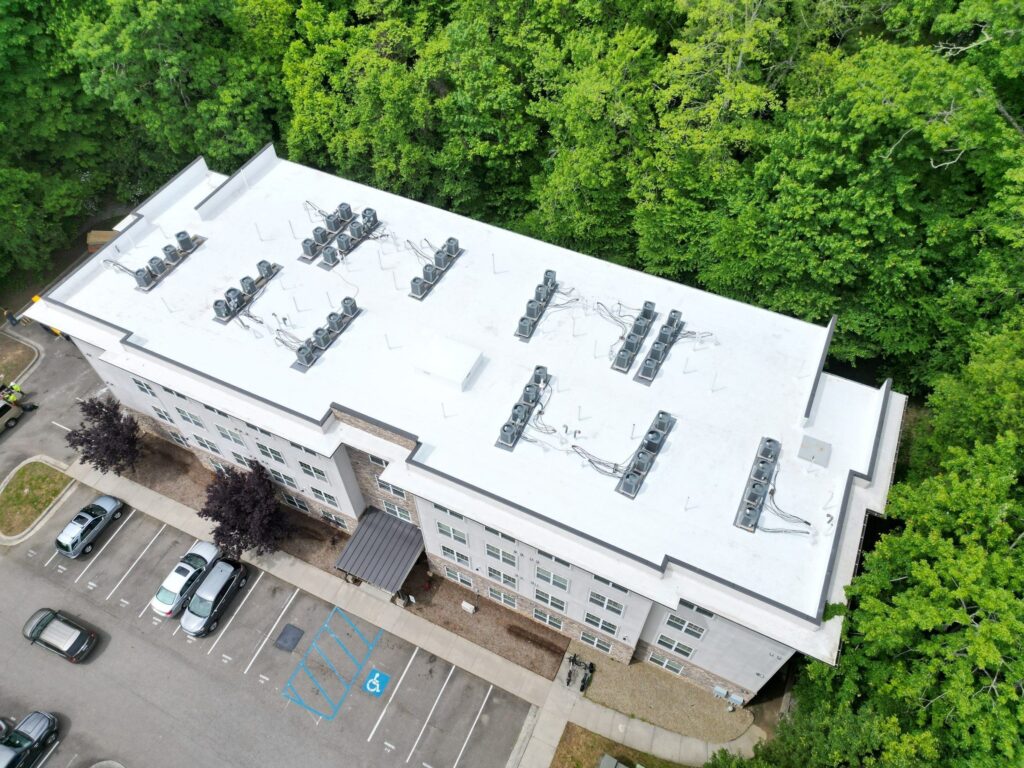
Most commercial roofs (TPO, EPDM, PVC, modified bitumen, or built-up roofing) sit on a low-slope or flat deck. That flat profile is efficient for large buildings, but it means water does not have gravity working in its favor the way it does on a steep residential roof. Every commercial roof needs a deliberate drainage plan: a combination of slope, drains, and overflow protection that moves water off the surface within a reasonable window after a storm.
Without that plan, water sits. And water that sits on a membrane, rather than running off it, is where most commercial roof problems start.
Interior Drains: The Workhorse of a Flat Roof
Interior drains, sometimes called roof drains, sit at low points built into the roof deck itself. Water flows across the membrane, into the drain body, and down through interior piping that runs through the building to a storm system. Because the piping runs inside the building, interior drains are typically the primary drainage method on large, multi-tenant flat roofs where scuppers and gutters alone would not clear the surface fast enough.
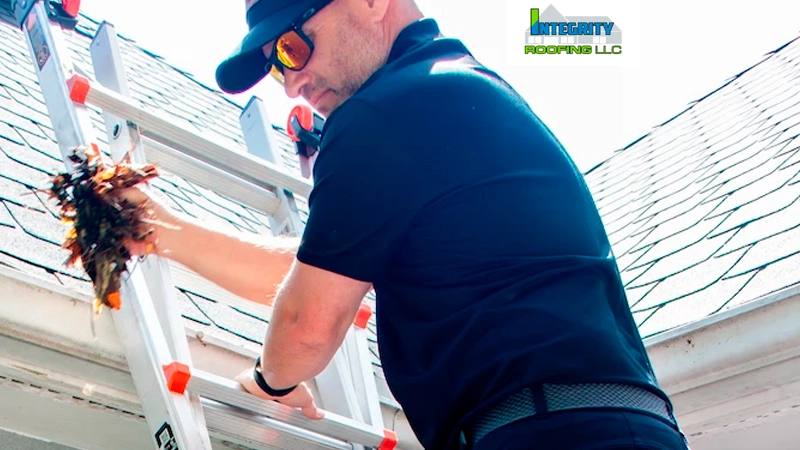
Each drain has a strainer or dome on top. That strainer keeps leaves, granules, and debris out of the pipe below. A clogged strainer is one of the most common, and most preventable, drainage failures we see on commercial buildings.
Scuppers and Overflow Protection
Scuppers are openings built into the roof’s perimeter wall or parapet that let water exit at the roof edge instead of routing down through the building. Many commercial roofs use scuppers as a backup to interior drains: if an interior drain clogs or a storm outpaces the primary system, an overflow scupper set slightly higher on the wall gives the water a second way out before it backs up onto the roof surface.
That redundancy matters. A single point of drainage failure on a large roof can mean standing water across a wide area rather than a small, contained puddle.
Gutters and Downspouts on Commercial Buildings
Gutters and downspouts show up most often on smaller commercial buildings or on roof sections with a defined edge and slope, rather than on large interior sections of a flat roof. They collect water at the edge and carry it down and away from the building’s foundation, similar to their residential role, just built to commercial-grade capacity. On a mixed-use or multi-roof-section building, it is common to see gutters handling the perimeter while interior drains handle the roof’s main field.
Tapered Insulation: Building the Slope In
A flat roof is rarely built perfectly flat on purpose. Tapered insulation is insulation board manufactured in a range of thicknesses and installed in a calculated pattern, so the roof surface has a gentle, engineered slope toward the drains even though it reads as flat to the eye. Done correctly, tapered insulation directs water toward interior drains or scuppers instead of leaving it to find its own way, or nowhere at all.
Tapered insulation is typically part of a full roof replacement rather than something added to an existing membrane, since it changes the roof’s underlying slope and drainage pattern.
Ponding Water: What It Is and Why It Matters
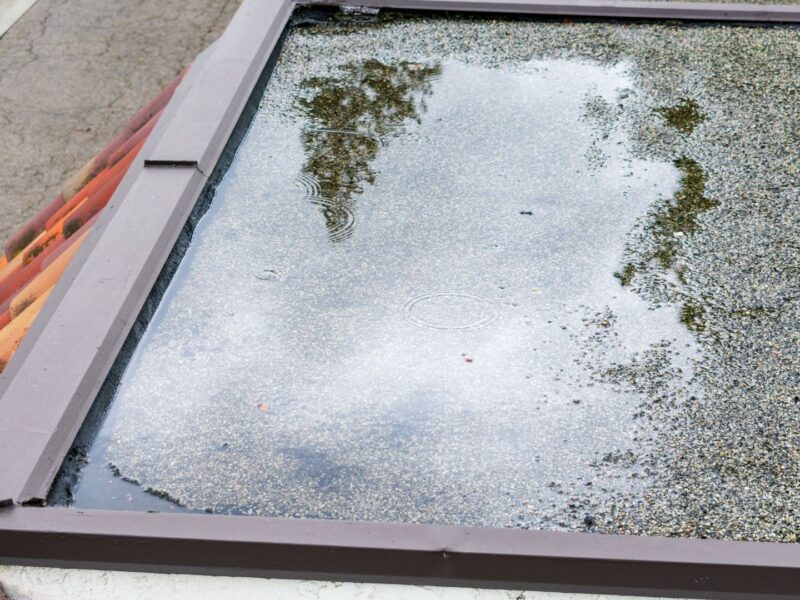
Ponding water is water that remains on a roof surface for an extended period after rainfall stops, rather than draining within a normal window. A little water sitting briefly after a storm is normal on almost any low-slope roof. Water that is still standing well after the rain has ended, in the same spot storm after storm, points to a drainage problem: a low spot in the substrate, a clogged or undersized drain, or insufficient slope.
Standing water adds weight the roof structure was not necessarily designed to carry long-term, and it keeps the membrane wet far longer than it should be. Over time, that constant moisture works against the membrane’s seams and any exposed fasteners.
Roof areas that stay shaded or get little direct sun, often the same areas prone to ponding, will hold moisture longer, and that can lead to algae growth on the surface.
Roof slopes that are shaded or receive little sunlight will hold moisture for a longer period of time which can result in algae growth. The discoloration or streaking is an aesthetic concern and does not affect the life of the roof system or its waterproofing characteristics.
The ponding itself is the issue worth tracking, not the discoloration.
Signs Your Drainage System Needs Attention
A few patterns are worth flagging to your maintenance team or roofing contractor:
- Water still standing on the roof more than a day or two after rain has stopped
- Debris visibly built up around drain strainers or scupper openings
- A tenant reporting a ceiling stain that appears after storms but not between them
- Gutters or downspouts overflowing at the edge during moderate rain, not just heavy storms
- A drain or scupper that was relocated or covered during a past renovation and never reconnected
None of these need to turn into an emergency. Caught early, most drainage issues are a maintenance conversation, not a roof-replacement conversation.
The Takeaway
Commercial roof drainage is not one component. It is a system: slope built into the insulation, drains and scuppers sized and placed correctly, and gutters where they make sense for the building’s layout. When one part of that system is undersized, clogged, or disconnected, water finds the lowest point and stays there.
If you manage a commercial property and have noticed standing water, a stained ceiling tile, or drains that have not been checked in a while, a roof inspection is the place to start. Contact our office and request a free roof inspection, no pressure, no obligation, and real humans from our Hickory office will walk the roof with you and explain what they find.